
No Expectations 143: Something Worth Waiting For
A Taste Profile interview with Friko's Niko Kapetan. Plus, recommended albums by Accessory and Brown Horse.

No Expectations hits inboxes on Thursdays at 9am cst. Reader mailbag email: Noexpectationsnewsletter@gmail.com. Daily Chicagoan, the local news newsletter I produce at my day job with WTTW News (PBS Chicago), can be found here.
Headline song: Friko, “Something Worth Waiting For”
Thanks for being here. If you’re reading this on Thursday, I’m currently on the final day of an Arizona vacation. I’ve hopefully made it through a book or two, gone out to some nice dinners, drank some beers by a pool, and relaxed enough to feel refreshed when I have to go back to work tomorrow. I’m writing this on Wednesday, April 15, so I have no idea if that’s the case. Maybe I missed my flight. Maybe I got food poisoning. Maybe I tripped during a desert hike and landed on a cactus. Either way, this No Expectations is scheduled out, and I’m staying off my phone to decompress.
This newsletter marks the return, after nearly a year, of No Expectations’ Taste Profile interview series, where I ask an artist I admire about three formative pieces of pop culture in their life and three more recent ones. You’ll also get a playlist (solidified on 4/15, so don’t expect any very new tunes), and a handful of recommendations. I plan to be back publishing the following week, but my schedule might get too hectic. As soon as I return from my trip, I’m hosting a friend in Chicago for the weekend and then seeing Bruce Springsteen for the very first time on Wednesday. There is a slim but real chance I will skip a week so I can go longer on my inaugural experience catching the Boss live.
Here’s the spiel for new subscribers: Each week, you get a wildcard main essay (often new album recommendations), a 15-song playlist, as well as updates on what I’m listening to, watching, and reading. Sometimes you’ll get an interview with an artist I love, and other times it’ll be a deep dive into one band’s discography. Since I’m a Chicago-based writer, this newsletter is very Midwest-focused. So, if you live in this city too, you’ll also receive a curated roundup of upcoming local shows to check out.
Here’s where I politely ask for money: This newsletter is something I write in my spare time after work. It does not have a paywall and won’t for the foreseeable future due to the generosity of my readers. I am not in the business of gatekeeping. If you have the means and like what you read, I’d encourage you to sign up for a paid subscription. If your budget is tight, telling a friend about a band you found out about here is just as good. You can also post about No Expectations and say nice things. That works too. It’s still $5 a month—the cost of one Old Style plus tip at Rainbo Club. Every bit helps, keeps this project going, and allows it to stay paywall-free. It’s rough out there, so it means the world you’re reading and supporting this writing project.
Taste Profile: Friko’s Niko Kapetan
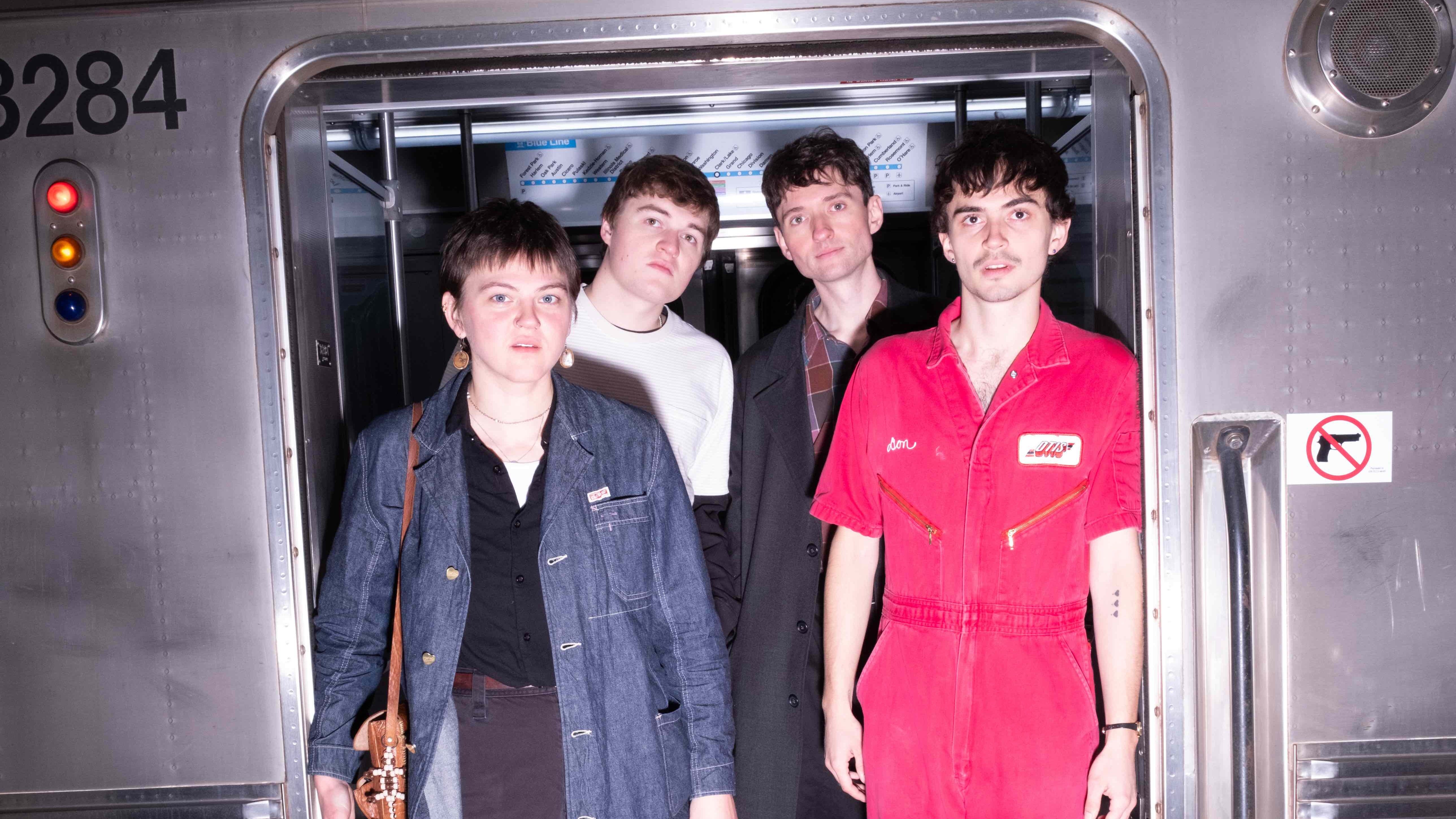
Friko’s songs are feverishly energetic and totally alive. It’s music that’s boisterous and galvanizing, full of big artistic swings and bigger emotions. I covered the Chicago quartet in the second-ever No Expectations in 2022, where I wrote, “Indie rock lately can feel insular and claustrophobic, but Friko isn’t afraid to make it feel huge, cathartic, and totally earnest.” That was true then, and even more so on their breakout 2024 debut LP, Where We’ve Been, Where We Go from Here. But their latest, Something Worth Waiting For, out Friday via ATO Records, is their most forceful statement yet.
Recorded with John Congleton, it’s an LP where they're really going for it and pull it off: hearkening back to an era where rock music had drama, emotional stakes, and ample flair. It’s no shock that frontman Niko Kapetan grew up idolizing David Bowie. Songs like “Choo Choo” are frantic and explosive, with surging guitar chords and Kapetan yelping, “Pile up interstate and we're in a rush/ Driving on state-to-state like we're on the run.” Kapetan and his bandmates, drummer Bailey Minzenberger, bassist David Fuller, and guitarist Korgan Robb, excel at the slow build and the towering crescendo throughout these nine ripping songs. Take “Alice,” which is twinkling and plaintive up until its soaring final minute, where Kapetan solidifies himself as one of the genre’s most dynamic and thrilling vocalists.
While I love Friko for being one of the city’s most exciting bands in a long time, they’re also basically my neighbors. Kapetan lives in the neighborhood, and the band’s practice space is steps from my apartment. Though it’d be clear from their live show that this is a locked-in group, I can tell you they rehearse a ton. If I’m walking to grab a coffee, there’s more than a 50-50 chance I’ll run into them outside. They’re also some of the nicest people making music here (a high bar), so it was a real no-brainer to interview Kapetan for the return of the newsletter’s Taste Profile series. Like his bandmates, Kapetan is charismatic and kind, and his three formative and three recent picks were all things I loved. Read on below for the full interview, and be sure to pick up the new album on Bandcamp.
Formative sport: Soccer
When I saw you at the Empty Bottle last week, we were talking about sports, and I had no idea you were going to choose soccer as one of your picks. Did you play growing up?
I played a bunch as a kid. My family is a classic Greek immigrant family. They owned a dry cleaning business, and they all played for our Greek church’s soccer team. My dad, who’s a big Tottenham Hotspurs fan, even played in college, so there was a lot of pressure around that growing up.
I played center back because I was always the biggest kid. I grew fast and then stayed there. Playing so much growing up informed the intensity that I put towards music. I never think of music as a sport, but there is an element of physical and mental endurance, especially on tour. You need to be able to push on even when it’s bad.
You guys were really going after it on the road with this last record. There were times I wouldn’t see you guys around the neighborhood for months. How did you handle being away for so long?
You’d be on tour opening for a band for two months, get a week’s break, and then have to go to Europe, do three weeks there, and then go to Asia for a few shows. That’s basically three months straight. You have to deal with performing, as well as the travel and time changes. But to be honest, it was great. If a band doesn’t actually all love each other, it’s gonna fall apart quickly, or you just stop talking to each other outside the stage. Every day you have to talk about something. It’s just how it is.
Beyond the physicality of soccer, it’s also the most team-based major sport. You could have the best player in the world, but you might not win a championship unless everyone is on the same page.
Especially with soccer, there’s a bigger emphasis on the team aspect than most sports. It’s also a very smart sport too. As a player, you constantly have to make a triangle to facilitate passing and movement. It’s the same thing on the road, but it’s more of a triangle of compassion, communication, and thinking about each other.
Formative album: Frank Ocean’s Blonde
It is insane to me that this album is turning 10 years old in August. What was going on in your life 10 years ago when you first heard it?
I was 16, and that was a time when I started listening to stuff other than classic rock or records that my dad put me on to. But when I first heard Blonde, I didn’t get it. A couple of years later, I heard “White Ferrari,” and it hit me like a rock. It basically just got me thinking about writing music, and how you could just do it in a way that’s completely outside of the idea of writing a classic song. Because up to that point, I really only tried to write songs like Bowie or the Beatles. In high school, my only go-to was the pop structure, but that record did something that resonated with me in every way: lyrically, melodically. The weird esoteric scope of it was amazing.
10 years ago, I was 24, and it was honestly such a good time to be hearing that record. I had already been covering music for a while, and that album had so many surprising production choices, unorthodox song structures, and his voice, it goes without saying, is unbelievable throughout.
That’s the tying force with all of this: how powerful his voice is. A once-in-a-generation type of talent. He introduced me to so many types of music: all hip-hop, rap, and R&B. When you grow up with a dad who is showing you the Smiths and the Cure, music I still love, getting into all this new music is such a joy. With the lyrics, you see how words work together in rap better than any other type of music. You won’t get that in like 99% of indie music. I love when singers put words together in a way that’s outside that realm of what you’d expect. It’s a different thing, but that’s sort of why I love Isaac Brock and early Modest Mouse. He had this weird, rhythmic style.
Very recently, I started really thinking about lyrics and writing them in a way where I feel comfortable in my own voice. I used to write lyrics because I had a melody and a chord progression, needed to write around that. I still do that sometimes, but now it’s very exciting to put lyrics first.
Formative album: Phillip Glass’ Glassworks
Glassworks is a record that I discovered in adulthood. How did you first hear it?
I was really into Illinoise, the Sufjan Stevens record, and he directly referenced Phillip Glass as an influence. The same goes for Blood Orange, who actually did an interview with Glass, which was super cool. I used to listen to Glassworks a lot in college. I went to Columbia College for one semester, and it was one of the worst few months of my life. I only made, maybe, one friend, and I used to go to Buckingham Fountain by the lake and listen to Glassworks. I’d stare at the lake or the Congress Hotel. I don’t know if it hit the same part of my brain that Blonde did, but it was a similar idea, where it was completely different than what I normally listen to. It had this quality of him being the pop artist of classical music. He just found his way into modern music, because I think he was just ahead of his time in seeing classical music as something that could have a pattern, as pop music does.
A few days ago, I saw that solo piano set you did at the Empty Bottle. I didn’t know you’d pick this album for the interview, but I could totally hear the influence in your playing.
Oh yeah. “Certainty” on our album is a complete rip of a Glass polyrhythm.
Recent book: Kurt Vonnegut’s The Sirens of Titan (1959)
If you were to turn the tables and interview me, Vonnegut would be a major contender for formative author, but I haven’t read him since maybe college.
Vonnegut’s books are so quick and easy to read. With Sirens of Titan, it just came to me at a time right before the last record was going to come out. Around then, I was feeling pretty lost, but I just read that, and it was such a beautiful story. It felt like he was making such a big statement, but in an almost goofy way at times. Along with Vonnegut, some of my favorite authors are Haruki Murakami and Ray Bradbury: both of them have a really graceful, beautiful way of writing. Vonnegut is just really likable, and I feel like my heart can just easily feel it as I’m reading him. I remember finishing Sirens of Titan and thinking that it just hit me at the perfect time in my life. You know, with some songs, sometimes they find you right when you need them the most. They might not be the most perfect thing, but when you get it at the right time, it will always be more special, no matter what.
There are certain moments in this book where he’ll just drop an incredible line: something that’s so beautiful I’ll think, “Oh my God, I want to write a song around that.” I think my favorite is when he says, “Luck is the way the wind swirls and the dust settles eons after God has passed by.”
Recent artist: Bill Callahan
Are you talking about Bill Callahan’s later solo stuff or Smog?
It’s mostly been Bill Callahan solo stuff for me recently. Sometimes I Wish We Were An Eagle, especially, and a few of his other records. I love the way that he can speak over a song. He’s the master at writing a devastating line that’s right next to something hilarious. On his latest record, which I loved, one of the songs is called “Pathol O.G.,” and it starts with the lines, “You know, I’ve been writing songs / And singing them for nigh on thirty years / I like it / I love it!” He just does stuff that I would never think to say in a song.
I’m not surprised that you like Bill Callahan, but he is sort of the polar opposite of how you go about singing and performing. He’s droll, monotone, and usually talks-sings, but you throw your voice around and imbue every line with emotion.
I think I love it so much because of that. It’s a “the grass is greener on the other side” thing, but maybe I can still pull some of that grass over to my side someday.
Recent show: Game of Thrones
By this, you mean the original series and not the new remakes, right?
The original, which I didn’t watch until this past month. My girlfriend and I are on season six now.
Holy shit, man. I watched it live and had to wait every year.
My girlfriend and I were sick a couple of weeks ago. Some stomach virus, but we were out of it, so we’d make it through eight or nine episodes a day. Before that, everybody in the band, Korgan, Bailey, and Jackson, our sound person, all loved it, so they had been hyping it all tour. We watched it, and it was so worth it. It’s so well written.
I hate being sick, but sometimes there is nothing better than being forced to do nothing. Are you a big TV person?
Not really, but my alltimer is Arrested Development. That’s the show I’ve watched and rewatched the most. If I were a comedy writer, I’d just study that series. Other than that, when I’m on tour, my band and I don’t really watch shows or movies. When we get to a hotel, if we have time, we’ll put on Deal or No Deal on YouTube—just brain-dead stuff to decompress.
The No Expectations 143 Playlist: Apple Music // Spotify // Tidal
Bobbie, “Cloud Vision”
World News, “Sidestep
Dry Cleaning, “Sliced by a Fingernail”
Lifeguard, “Appetite”
Deer Tick, “Mary Singletary”
Kevin Morby, “Die Young”
Sluice, “Torpor”
Trinity Ace, “Martyr”
Stephen Becker, “Careless”
Brown Horse, “Hares”
Zoh Amba, “Another Time”
Wendy Eisenberg, “Another Lifetime Floats Away”
Pearla, “Imagine Your Face”
Accessory, “Sunshine”
Blue Earth Sound, “Chartreuse”
Accessory, Dust
A couple of years ago, I was at Sleeping Village for the Cosmic Country Showcase, an excellent music, comedy, and variety show where local and national artists cover classic songs and play originals. That night, Jason Balla was a guest, and he sang a really lovely rendition of Arthur Russell’s “I Couldn’t Say It to Your Face.” I’ve known Balla for a decade, and I’m used to seeing him pogo across the stage and ripping clanging riffs in bands like Dehd and NE-HI, but this performance showed Balla’s softer side. Since 2018, his solo project Accessory has explored these more melancholy, midtempo lo-fi sounds, mostly through performances that could be just Balla onstage alone or with a sprawling, eight or nine-piece band dubbed Accessory XXL. Dust, Accessory’s sophomore album, is moody, hazy, and much more crisp and immersive than his earlier fare (Balla co-produced the LP with Whitney’s Ziyad Asar). “World of Pain” is warmer than its title suggests, with lush keys and mournful saxophone, while the single “Safeword” is a punchy dose of atmospheric rock music. This is a meditative and woozy record, with more than enough layers to peel back upon each successive listen.
RIYL: Arthur Russell, Cindy Lee, Hazel City
Brown Horse, Total Dive
U.K. bands have been fascinated with Americana for at least the past 60+ years. But where the Beatles and the Rolling Stones took cues from Howlin’ Wolf, Fats Domino, and Chuck Berry, Norwich’s Brown Horse finds its inspiration in the brooding and twangy guitar rock of Magnolia Electric Co., Neil Young, and Purple Mountains. Their sophomore record, All the Right Weaknesses, was a 2025 newsletter favorite, and their follow-up, Total Dive, expands their snarling countryfied rock into knottier and more expansive territory. Single “Wreck” is carried by a simmering fuzzy riff that eventually builds into a boil where guitar solos and pedal steel wails snake around each other. Elsewhere, the near-six-minute “Hares” is a masterclass in the slow build. Elegiac and powerful, it trudges along with gorgeous lines like, “I hear it and I see / That time on earth is worthwhile / And there’s nowhere else to go.” With muscular and rustic arrangements brimming with feeling, you’ll feel it too.
RIYL: Greg Freeman, Magnolia Electric Co., Gillian Welch and David Rawlings
What I watched:
Nirvanna The Band The Show The Movie (directed by Matt Johnson)
Last month, I finally got around to watching the web series and eventual Viceland show Nirvanna The Band The Show from Canadian filmmakers Matt Johnson and Jay McCarrol. It’s an uproarious comedy about two hapless Torontonians who are aspiring musicians trying to secure a gig playing the tiny downtown bar/restaurant, the Rivoli. Instead of simply calling the venue and asking, they come up with increasingly ill-advised and foolish plans to get a booking. Though the series has been off the air since 2017, they’ve returned this year with a feature film that might be the movie that’s made me laugh the most in a decade. It’s genius. There are lines, meta bits, and throwaway jokes that are so good that I can rattle off a dozen of them even after one viewing. It’s already burrowed its way into my brain forever. You’ll find it funny even if you’ve never seen the web series or show, but I’d recommend seeking those out first so you have some context before you dive into the best comedy of 2026.
What I read:
Bonsai (by Alejandro Zambra)
Around the beginning of the year, a Friend of the Newsletter texted me the link to a sprawling and inventive indie rock record by a band from Santiago, Chile. (I’ll be writing about it in a future “2025 Albums I Missed” roundup, likely publishing mid-May). It was good timing as I was then going through a major Roberto Bolaño reading phase and had just watched a spectacular three-part documentary called The Battle For Chile about the 1973 CIA-backed coup against Salvador Allende that installed dictator Augusto Pinochet. When I mentioned all this, he recommended checking out the Chilean writer Alejandro Zambra. In January, I did just that, starting with his 2006 novella Bonsai, which was translated into English in 2022. The story follows an ill-fated high school romance between Julio and Emilia, which burned brightly due to a shared love of literature. It’s no spoiler to mention that death and memory permeate the story as the opening paragraph features this line, “In the end she dies and he is alone, although really he had been alone for some years before her death.” But the way Zambra plays with the story, adds heady, meta-fictional layers to the narrative, and packs in so much metaphor and meaning in such a slim package is astounding. When I texted my friend that I finished it in a day, he replied, “Oh, that’s awesome, but I meant Zambra’s other book, The Chilean Poet.” Months later, that other one is still on the list.
The Weekly Chicago Show Calendar:
The gig calendar lives on the WTTW News website. You can also subscribe to the newsletter I produce there called Daily Chicagoan to get it in your inbox a day early.
Frank Ocean and Steve Lacey completely changed how I thought about songs and how to write them. Absolute legends Blonde was the soundtrack for so long